
In pet-raising life, the round and chubby appearance of cats may seem cute, but it may actually hide health risks. From a professional perspective, a cat is considered overweight if its weight exceeds the ideal value by 10%-20%, and obese if it exceeds 20%—a common health problem faced by many indoor cats nowadays.
Obesity is not an “exclusive breed issue” for cats. Whether it is a delicate Siamese cat or a sturdy Maine Coon, all have the potential to gain weight. This extra weight erodes cats’ health in many ways: it not only weakens their immune system, making them prone to frequent illnesses, but also may cause metabolic disorders, among which feline diabetes is a high-incidence problem. Joints will ache due to excessive weight-bearing, making it difficult for cats that were once agile to even jump onto furniture; the heart will also bear an additional load, affecting blood circulation. More worrying is that obesity can directly shorten a cat’s lifespan by 2-5 years, equivalent to a human losing 15-35 years of life, greatly reducing the time owners can spend with their cats.
At the same time, obesity can also bring psychological pressure to cats: inability to complete jumping, climbing and other movements due to inconvenience can cause frustration; excessive body fat makes it difficult for them to groom their entire fur, leading to inferiority; long-term metabolic abnormalities may also cause cats to have persistent food anxiety due to malnutrition, and their personalities may become irritable.
Common Causes of Feline Obesity
Cat obesity is never caused by a single factor, but by the combined effect of multiple factors. In addition to the common overfeeding, age, physiological state, lifestyle and other factors also play important roles.
From the perspective of basic risk factors, middle-aged cats aged 8-12 years old will have a natural slowdown in metabolic rate, resulting in less calorie consumption and easy fat accumulation; after sterilization, the hormonal balance in cats’ bodies changes, their appetite may increase, and their willingness to exercise may decrease, which is also an important reason why sterilized cats have a high risk of obesity; cats that stay indoors for a long time lack sufficient exercise space and opportunities, and their daily activities are limited to between the food bowl and the rest area, making it impossible to effectively consume calories; the ad libitum feeding method allows cats to eat uncontrollably, which is very likely to cause calorie excess.
From the perspective of dietary details, dry food has a relatively high calorie density and is more likely to lead to weight gain than wet food; the “few snacks” casually fed by owners, although small in quantity, have a significant cumulative calorie effect over time. Many owners are used to adding food to cats by feeling without precise quantity control, which also makes cats’ food intake exceed the standard invisibly, becoming an important driver of weight gain.
In addition, the owner’s way of expressing affection can also indirectly lead to cat obesity. Many people express their love for cats through food. Faced with the cats’ watery eyes, they always can’t help but feed a few more snacks, turning “occasional feeding” into a “daily routine”, and finally making the cats gain weight unconsciously.
Professional Assessment of Obesity from a Veterinarian’s Perspective
Judging whether a cat is obese cannot rely solely on weight figures. A professional veterinary assessment will combine body condition scoring and physical examination to comprehensively judge the cat’s obesity degree and health status, which is also the basis for formulating a scientific weight loss plan.
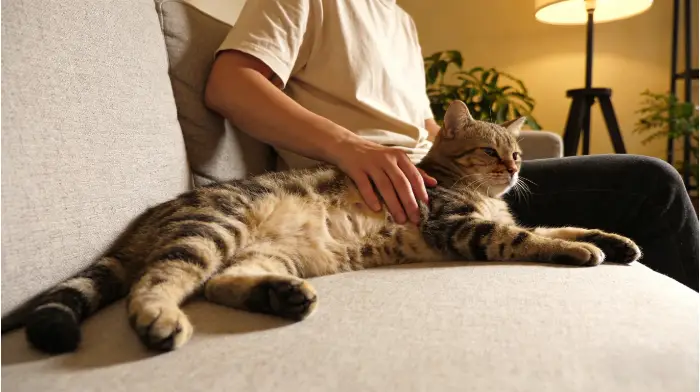
Body condition scoring is the core of veterinary assessment, mainly judged from three aspects: touching the ribs—for a healthy cat, the ribs can be clearly felt under a thin layer of fat, with a texture similar to touching the knuckles when making a fist; observing the waist—there should be an obvious waistline behind the cat’s ribs, rather than a round outline; checking abdominal fat—obese cats will have an obvious fat “apron” on the abdomen, which is a typical sign of fat accumulation. Even if two cats have the same weight, their body composition may be very different, and body condition scoring can more accurately reflect the cat’s actual obesity situation.
At the same time, veterinarians will also conduct blood tests and other physical examinations for obese cats to check for various complications caused by obesity, such as hyperglycemia (diabetes warning), arthritis, hypertension, etc. These issues will be focused on during the weight loss process to avoid increasing the body burden due to weight loss.
Core Plan for Scientific Weight Loss in Cats
The core principle of formulating a weight loss plan for cats issafety and gradual progress, combining dietary adjustment and exercise improvement, and the entire process must follow the professional advice of veterinarians to avoid blind dieting.
Dietary Adjustment: Choose the Right Food and Control Quantity Precisely
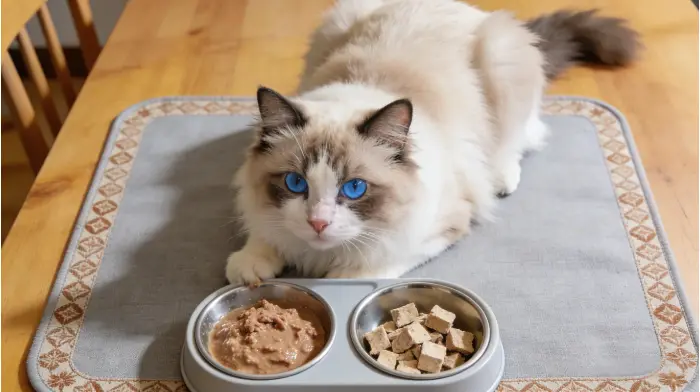
The key to weight loss lies in diet, not simply reducing food intake, but choosing cat food suitable for weight loss and controlling calories precisely. High-quality weight-loss cat food needs to meet the characteristics of high protein, high dietary fiber, and low carbohydrates: high protein can enhance the cat’s satiety and reduce appetite; high dietary fiber helps promote intestinal digestion and increase fecal volume; low carbohydrates conform to the physiological characteristics of cats as carnivores, avoiding excess carbohydrates being converted into fat.
When changing cat food, the 7-10 day transition principle should be followed, gradually replacing the old food with new food to prevent cats from having digestive problems such as diarrhea and vomiting. In terms of quantity control, a kitchen scale is a more accurate tool than a measuring cup. Weighing food in grams can accurately control the cat’s food intake. Generally speaking, obese cats need to reduce their daily calorie intake by 20%-30%, but the specific value needs to be calculated by a veterinarian based on the cat’s ideal weight. The calories from snacks also need to be included in the daily calorie quota. It is recommended to choose low-calorie snacks or use other methods instead of snack rewards.
Exercise Improvement: Fun Guidance and Gradual Progress
For cats that do not like to exercise, forced exercise will only be counterproductive. Fun guidance is the key—even the laziest “couch potato” cat can move in fun interactions.
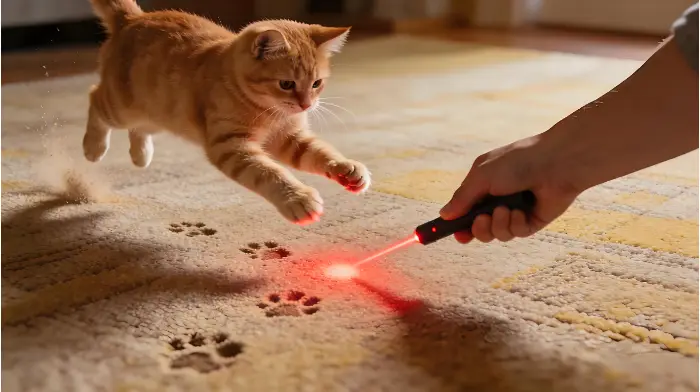
Exercise can start with a short time, only 5-10 minutes a day, and gradually increase the duration and intensity. You can use laser pointers, cat teasers, feather toys, etc., to stimulate the cat’s hunting instinct, allowing them to consume calories in chasing and pouncing; you can also use puzzle feeders to make cats think to get food, combining eating with exercise; you can also set up elevated feeding platforms to encourage cats to jump, or take cats for short walks on a harness.
At the same time, enriching the cat’s living environment can also increase their activity level: place cat trees, shelves and other structures to create vertical space, allowing cats to have opportunities to climb and jump; replace toys once a week to maintain the cat’s freshness; a simple cardboard box can also let cats consume calories in crawling and playing. Even just moving the food bowl, such as placing it upstairs, in different rooms or at the end of the corridor, can increase the walking distance of cats during eating, and the cumulative exercise effect is very considerable over time.
Secrets to Maintaining Long-Term Weight Loss Results
Cat weight loss is not an overnight task. After reaching the ideal weight, how to maintain the weight is the real challenge. Many cats experience weight rebound because owners relax their daily management. To maintain long-term weight loss results, the following points need to be done well.
First, adhere to a scientific feeding method, avoid returning to ad libitum feeding, still use a kitchen scale to weigh food precisely, control daily calorie intake, and keep snack feeding restrained, not increasing it arbitrarily just because the cat’s weight meets the standard. Second, maintain regular weight monitoring. It is recommended to weigh the cat once a month to detect weight fluctuations in time. If there is a rebound trend, adjust the diet and exercise plan in time.
Third, maintain daily exercise habits. Do not reduce the time for playing and interacting just because the cat’s weight has recovered. Still ensure a certain amount of exercise time every day to maintain the cat’s calorie consumption. At the same time, continue to maintain a rich living environment to keep the cat’s high willingness to move. Finally, continue a healthy way of expressing affection, using playing, grooming, praise and other methods instead of food rewards, so that cats can feel the owner’s love, not just the company of food.
When cats maintain a healthy weight for a long time, they will regain their lively state, play freely like kittens, groom their entire fur independently, and be full of interest in life—this is the best reward for owners who insist on scientific management.
Key Points for Preventing Feline Obesity
Preventing cat obesity is much simpler and more effective than losing weight afterwards. The core of weight management is “early detection and early intervention”, establishing healthy feeding and living habits from the cat’s childhood.
First, do a good job in regular weight and body condition checks. From the cat’s childhood, weigh it regularly and observe its body outline. Once the cat shows signs of being overweight, adjust the diet and exercise plan in time. At this time, fat accumulation is not serious, and it will be easier to control.
Second, establish a scientific feeding mode. From the beginning, avoid ad libitum feeding, set the daily food intake for cats with precise quantity control, choose cat food suitable for the cat’s age group, avoid long-term feeding of high-calorie dry food, and keep snack feeding restrained from childhood to let cats develop good eating habits.
Third, cultivate the cat’s exercise habits from an early age. Create a rich activity environment for kittens, interact and play more with them, let cats develop the nature of loving sports, and avoid forming the habit of not liking exercise due to long-term laziness. For sterilized cats, adjust their diet in time after surgery and increase exercise companionship to offset the obesity risk caused by hormonal changes.
Finally, owners should establish a correct concept of pet raising, understand that “love is not overfeeding”, and that true care is to let cats maintain a healthy weight and have long-term companionship, avoiding letting cats fall into the health crisis of obesity due to temporary doting.
Avoiding Common Pitfalls in Weight Loss
Many owners, out of good intentions, fall into pitfalls when helping their cats lose weight, which not only greatly reduces the weight loss effect, but also may damage the cats’ health. These common pitfalls must be avoided.
Falling into the Marketing Trap of “Healthy Weight” Cat Food
Many cat foods on the market labeled “Light/Lite”, “Weight Control” and “Natural” are not real weight-loss products: “Light/Lite” products may have only slightly lower calorie content than ordinary cat food, with limited weight control effect; “Weight Control” products often have higher carbohydrate content than protein, which does not meet the physiological needs of cats; “Natural” is only a raw material description and has nothing to do with calorie content. The only criterion for choosing weight-loss cat food is to check and compare the calorie content per cup. At the same time, do not blindly believe the feeding guidelines on the packaging, which are usually too loose and need to be adjusted according to the veterinarian’s advice.
Weekend Overfeeding Syndrome
Many owners can adhere to the weight loss plan on weekdays, but relax their vigilance on weekends, thinking that “feeding a few more snacks is okay”. However, the calories from the seemingly small amount of snacks accumulate surprisingly: a 10-pound cat that takes in an extra 10 calories of snacks every weekend will consume an additional 520 calories a year, equivalent to a human eating an extra 15,000 calories a year—enough to make all weight loss efforts go to waste. Weight loss is a continuous process that requires consistent dietary principles, regardless of weekdays or weekends.
Blind and Rapid Dieting
Some owners are eager to see weight loss results and will suddenly reduce the cat’s food intake significantly, which is an extremely dangerous behavior. If an obese cat suddenly stops eating or its calorie intake drops sharply, it may develop fatty liver within 2-3 days. The body will transfer fat to the liver, which can be life-threatening in severe cases. The safe weight loss rate for cats is 1%-2% of their body weight per week, and all weight loss plans must follow the principle of gradual progress.
Ignoring the Cumulative Calories of Snacks
Many owners ignore the calories of snacks, thinking that “feeding a few pieces will not affect”, but in fact, the calories from snacks may account for 25% of the cat’s daily calorie intake, becoming the biggest obstacle to weight loss. During weight loss, either choose low-calorie snacks and include them in the total calories, or use non-food methods instead of snack rewards.
When to Seek Professional Help for Special Cases
Cat weight loss is a process that requires full attention. If abnormal conditions occur, you need to stop self-adjustment in time and seek professional help from a veterinarian to avoid more serious health problems.
When a cat shows symptoms such as not eating for more than 24 hours, extreme drowsiness, frequent vomiting or diarrhea, you should contact a veterinarian immediately to check if the cat has physical discomfort caused by weight loss; if the cat’s weight drops too fast during weight loss, exceeding the safe range of 1%-2% of body weight per week, you also need to consult a veterinarian in time to adjust the weight loss plan.
For cats with severe obesity or complications such as diabetes, arthritis and hypertension, it is recommended to seek help from a veterinary nutritionist. The nutritionist will formulate a personalized meal plan according to the cat’s accurate calorie needs, existing health status, combined with the owner’s lifestyle and budget—equivalent to equipping the cat with a private weight loss coach and chef, making the weight loss process safer and more efficient.
Frequently Asked Questions About Cat Weight Loss
Q1: How to quickly judge if your cat is overweight or obese?
A: The simplest method is the “rib test”—touch the cat’s chest with your hand. If you can clearly feel the ribs under a thin layer of fat and there is an obvious waistline when viewed from above, it is a healthy state; if the weight exceeds the ideal value by 10%-20%, the fat feel is obvious when touching the ribs and the waistline is shallow, it is overweight; if it exceeds 20%, the ribs are almost impossible to feel, the body is round like an olive, and there is no obvious waistline, it is obese.
Q2: What is the fastest and most effective way for indoor cats to lose weight?
A: There is no “magic bullet” for indoor cat weight loss. The most effective combination is dietary adjustment + exercise improvement. First, switch to high-protein, low-carbohydrate wet food, control the quantity precisely with a kitchen scale, and avoid feeding by feeling; second, increase fun exercise, such as placing the food bowl at different heights, using puzzle feeders, and interacting and playing for 5-10 minutes a day; at the same time, enrich the indoor activity environment and create vertical space to let cats climb and move more. Adhere to it for 8-12 weeks, and most cats will show obvious weight changes.
Q3: Are certain cat breeds more prone to obesity?
A: Although any breed of cat can be obese, domestic shorthair cats have a relatively high probability of obesity due to their large numbers; among purebred cats, docile breeds with low willingness to exercise, such as Ragdolls and British Shorthairs, have a higher risk of weight gain. However, breed is not a decisive factor—lifestyle and eating habits are the key: an active Siamese cat will also gain weight if fed ad libitum for a long time; a sturdy Maine Coon can stay slim with precise quantity control + appropriate exercise.
Q4: How many calories should an obese cat consume per day?
A: Generally speaking, obese cats need to reduce their daily calorie intake by 20%-30%, but each cat’s situation is different. For example, an obese cat weighing 15 pounds (about 7 kilograms) needs about 180-220 calories per day. The most scientific way is to consult a veterinarian to calculate the precise intake based on the cat’s ideal weight, not the current weight. At the same time, the calories from snacks must be included in the total quota, which should not be ignored.
Q5: After a cat successfully loses weight, can it return to its previous feeding method?
A: It is not recommended. After successful weight loss, the cat enters the weight maintenance stage and still needs to adhere to the precise quantity control feeding method, avoid returning to ad libitum feeding, and maintain regular weight monitoring and exercise habits. If returning to the previous feeding method, the cat is very likely to have weight rebound, and all previous weight loss efforts will be in vain.
Warm-Hearted Success Stories of Cat Weight Loss
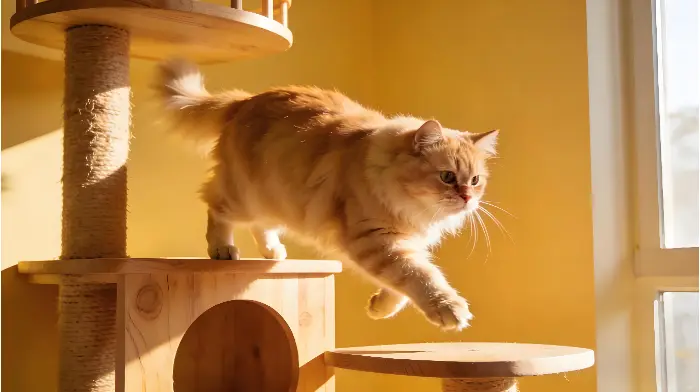
Case 1: The Transformation of “Mr. Whiskers”, a 20-Pound Tabby Cat
“Mr. Whiskers” was a 20-pound tabby cat. Due to extreme obesity, he could barely walk and even suffered from arthritis, making it impossible for him to jump onto furniture. Under the guidance of a veterinarian, the owner formulated an exclusive weight loss plan for him: stopped ad libitum feeding and switched to regular and quantitative precise feeding; gradually transitioned to high-protein, low-carbohydrate weight-loss cat food; ensured 10 minutes of interactive play every day, using a cat teaser to stimulate his interest in exercise.
Six months later, “Mr. Whiskers” successfully lost 6 pounds, the pain from arthritis completely disappeared, and he regained his jumping ability—even able to easily jump onto the kitchen counter, making the owner both happy and worried. The once lazy “couch potato” turned into an active cat that loved running and jumping, and his personality became much more cheerful.
Case 2: A Small Surprise—Losing 2 Pounds in Three Months by Moving the Food Bowl
An owner found that his cat had been inactive for a long time and its weight was soaring. On the advice of a veterinarian, he tried a simple method: changing the position of the food bowl. Originally, the food bowl was placed next to the cat’s rest area. The owner began to move the food bowl to different rooms every day, sometimes upstairs, sometimes at the end of the corridor, forcing the cat to walk a certain distance to eat.
This small change greatly increased the cat’s daily activity level. The owner did not adjust the cat food or feeding amount, but only increased the amount of exercise during eating. Within three months, the cat successfully lost 2 pounds, and its physical condition improved significantly—it no longer slept all day and began to actively explore every corner of the house.
These two cases also confirm that cat weight loss is not difficult. As long as you find the right method and persist in implementing it, even a small change can bring great surprises, helping chubby kitties regain lightness and health.